
When Law Meets Language: Inside Interpretation at GCC Law Week 2025
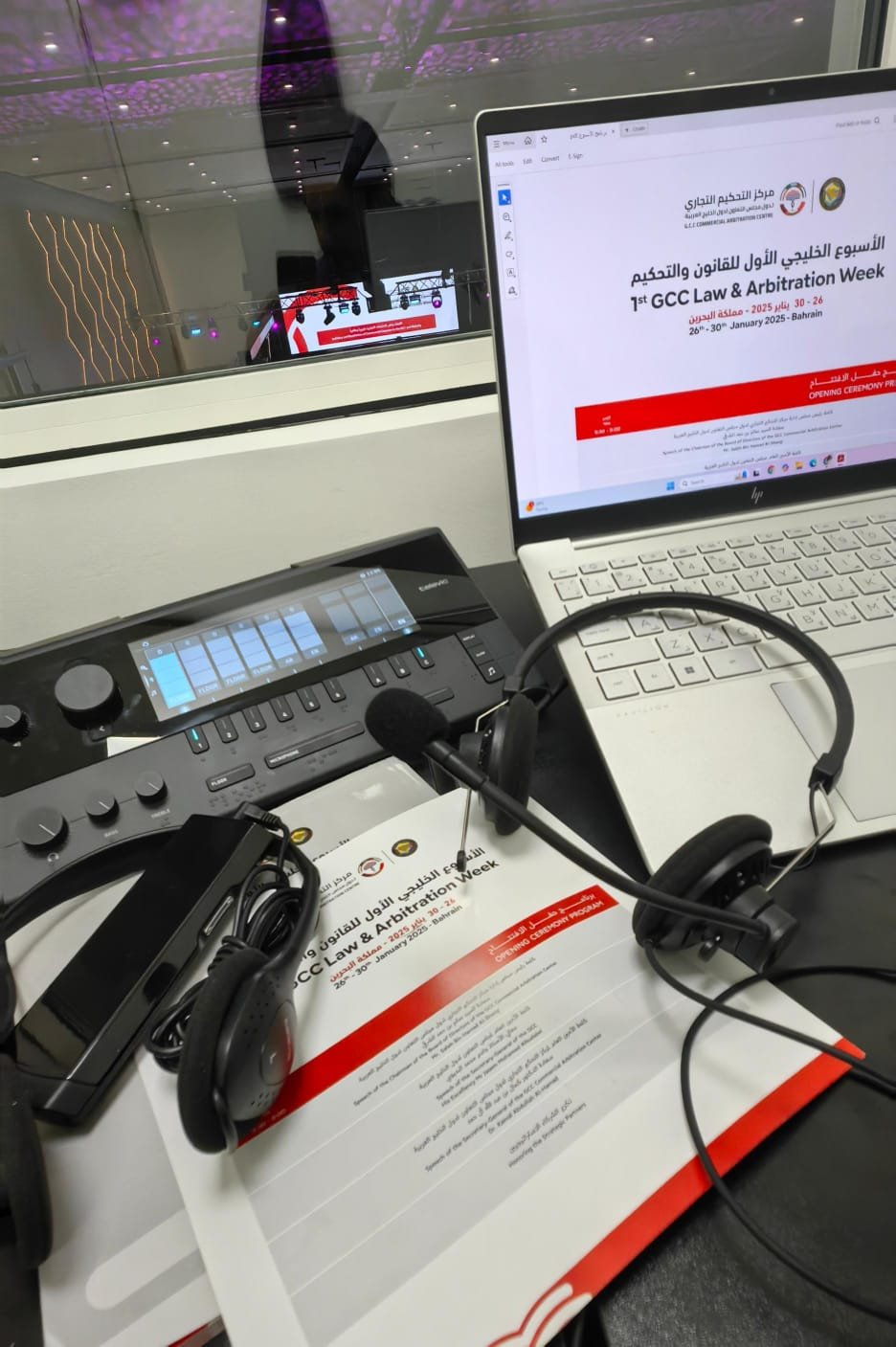
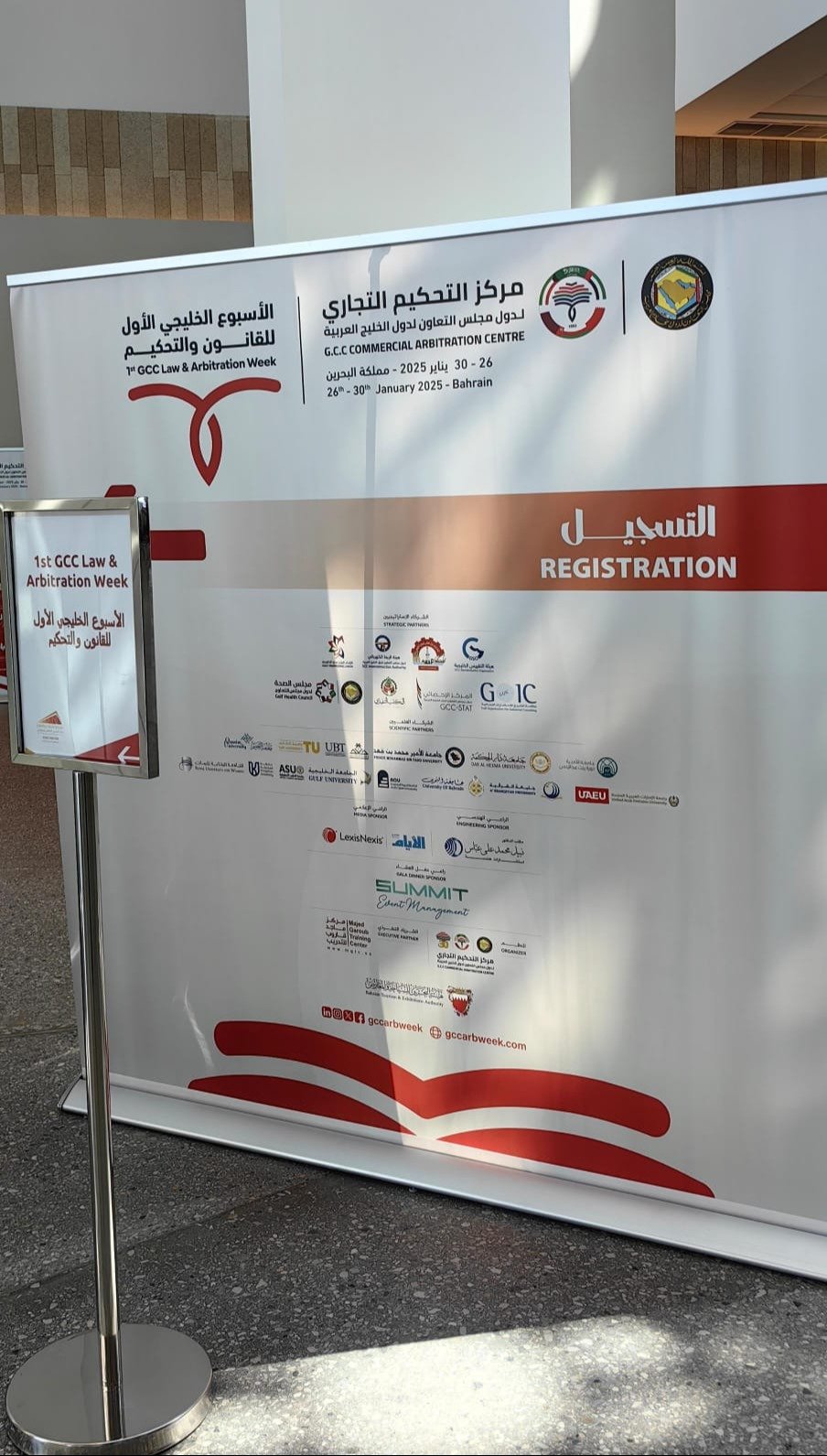
In January 2025, Bahrain hosted the 1st GCC Law & Arbitration Week—an event that brought together legal experts, arbitrators, policymakers, and international stakeholders to discuss the future of dispute resolution and investment frameworks in the region. Behind the panels, negotiations, and discussions, there was a critical layer that determined whether communication was effective or flawed: legal interpretation services in Bahrain.
In high-level legal settings, interpretation is not a supporting function. It is operational infrastructure. When law meets language, precision is not optional—it is fundamental.
The Stakes of Interpretation in Legal Events
Legal conferences are not typical multilingual events. The discussions taking place at GCC Law Week involved:
Cross-border disputes
Arbitration procedures
Legislative frameworks
Investment and regulatory policies
In such environments, a minor linguistic deviation can alter meaning significantly. A term incorrectly interpreted may affect how liability is understood, how obligations are perceived, or how agreements are framed.
This is the reality:
In legal contexts, interpretation is not about fluency—it is about liability.
Why Legal Interpretation Is Different
Many clients assume that interpretation is a general skill. It is not—especially in legal settings.
Legal interpretation requires:
Mastery of legal terminology in both Arabic and English
Understanding of different legal systems (civil law, common law, hybrid frameworks)
The ability to process complex arguments in real time
Absolute accuracy with zero tolerance for approximation
Unlike general conference interpretation, legal interpretation leaves no room for “close enough.” Every term carries weight. Every sentence may have implications.
This is where Arabic–English legal interpretation becomes particularly complex. Direct equivalence between terms does not always exist, and interpreters must navigate meaning—not just vocabulary.
Challenges in GCC Legal Interpretation
The GCC presents a unique linguistic and legal landscape.
1. Mixed Legal Systems
Across the region, legal frameworks differ. Some jurisdictions follow civil law structures, others incorporate elements of Sharia, and many operate within hybrid systems influenced by international arbitration standards.
2. Bilingual Precision
Legal discussions often switch between Arabic and English. However, the two languages do not always align structurally or conceptually in legal contexts. This requires interpreters to bridge not only language—but legal logic.
3. Cultural and Legal Nuance
Certain legal concepts carry cultural weight. Interpreting references related to Sharia, contractual obligations, or regulatory frameworks requires contextual awareness—not just linguistic skill.
A single mistranslation in arbitration is not a minor error—it is a risk.
The Technical Side of Interpretation
One of the most overlooked aspects of conference interpretation in Bahrain is the technical infrastructure.
Interpretation quality is not purely linguistic. It is also technical.
Key elements include:
Soundproof interpretation booths
High-quality microphones
Reliable audio distribution systems
Proper headset channels for multilingual audiences
Backup systems to avoid disruption
Poor audio clarity leads to cognitive strain for interpreters. When interpreters struggle to hear clearly, accuracy declines. This is not a theoretical risk—it is a practical reality.
At events like GCC Law Week, where discussions are dense and terminology is specialised, audio quality directly affects interpretation accuracy.
This is why interpretation and equipment cannot be treated as separate services. They are interdependent.
Common Mistakes Event Organisers Make
Despite the high stakes, many organisers still underestimate interpretation requirements.
1. Hiring One Interpreter for Full-Day Sessions
Legal interpretation is cognitively demanding. A single interpreter cannot maintain accuracy for extended periods. The industry standard requires at least two interpreters per language, working in rotation.
2. Late Engagement
Interpretation is often arranged at the last minute, leaving no time for preparation. Legal interpreters need access to:
Agendas
Case materials
Terminology lists
Background documents
Without preparation, performance suffers.
3. Ignoring Technical Setup
Some organisers invest heavily in venue design and overlook audio systems. This is a critical error. Even the most skilled interpreter cannot compensate for poor sound quality.
4. Treating Interpretation as a Cost Centre
Attempting to minimise costs in interpretation often leads to operational failure. In legal events, interpretation is not an optional add-on—it is a core component of communication.
Key Takeaways for Legal Conferences
Based on observations from events like GCC Law Week 2025, several conclusions are clear:
Legal events require specialised interpreters, not generalists
Interpretation must be integrated into early planning stages
Technical infrastructure is as important as linguistic expertise
Preparation is essential for accuracy
Demand for legal interpretation services in Bahrain is increasing as the GCC strengthens its position as an arbitration hub
Key Takeaways for Legal Conferences
Based on observations from events like GCC Law Week 2025, several conclusions are clear:
Legal events require specialised interpreters, not generalists
Interpretation must be integrated into early planning stages
Technical infrastructure is as important as linguistic expertise
Preparation is essential for accuracy
Demand for legal interpretation services in Bahrain is increasing as the GCC strengthens its position as an arbitration hub
Strategic Outlook: Interpretation as a Competitive Advantage
As Bahrain and the wider GCC continue to position themselves as centres for arbitration and international investment, multilingual communication will become even more critical.
Interpretation will no longer be seen as a background service. It will be recognised as a strategic function that enables:
Accurate legal communication
Efficient negotiations
Credible international engagement
For organisers, law firms, and institutions, the question is no longer whether interpretation is needed—but whether it is being handled at the required professional standard.
Final Thought
Events like GCC Law Week highlight a simple reality:
When law meets language, there is no margin for error.
Professional simultaneous interpretation services, supported by proper technical infrastructure, are not a luxury. They are a necessity for any serious legal event in Bahrain and across the GCC.
The difference between a successful conference and a flawed one is often not what was said—but how accurately it was understood.